Current Trends and Breeding Strategies for the Development of Industry-Quality Durum Wheat: A Comprehensive Review
Keywords:
Durum wheat, Grain quality, Common wheat, Molecular marker, Conventional and Non-conventional strategiesAbstract
Introduction:
Durum wheat (Triticum turgidum subsp. durum) is an important cereal crop known for its superior seed and protein quality. It is widely used in the production of pasta, semolina, couscous, bulgur, noodles, and bakery products.
Objective: This review evaluates the global and Pakistani status of durum wheat, highlighting its lower production compared to common wheat and the importance of quality-related traits.
Methodology: A comprehensive literature review was conducted on durum wheat production, quality traits, and breeding strategies. Both conventional methods (pedigree selection, single-seed descent, bulk selection) and modern approaches (Marker-Assisted Breeding and Marker-Assisted Selection for gene pyramiding) were analyzed.
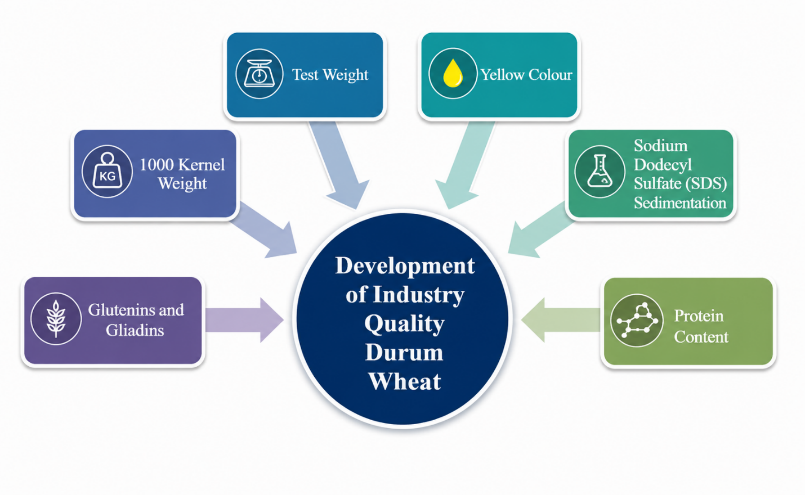
Results: Protein-related parameters such as glutenins, gliadins, 1000 kernel weight, test weight, yellow pigmentation, SDS sedimentation, and protein content significantly influence industrial quality. Molecular breeding approaches, particularly MAS and gene pyramiding, effectively enhance grain protein and quality traits, enabling the development of improved cultivars.
Conclusion: Integrating conventional and modern breeding techniques is essential for improving durum wheat productivity and quality. Marker-assisted approaches play a key role in developing high-quality cultivars to meet industrial demands, providing direction for future research in Pakistan and globally.