Comparative Evaluation of Yield Performance and Earliness in Maize (Zea mays L.) Hybrids under the National Uniform Yield Trial (NUYT)
Keywords:
Maize, Genetic Variability, Seed Yield, Forage Yield, Genotype Evaluation, Correlation AnalysisAbstract
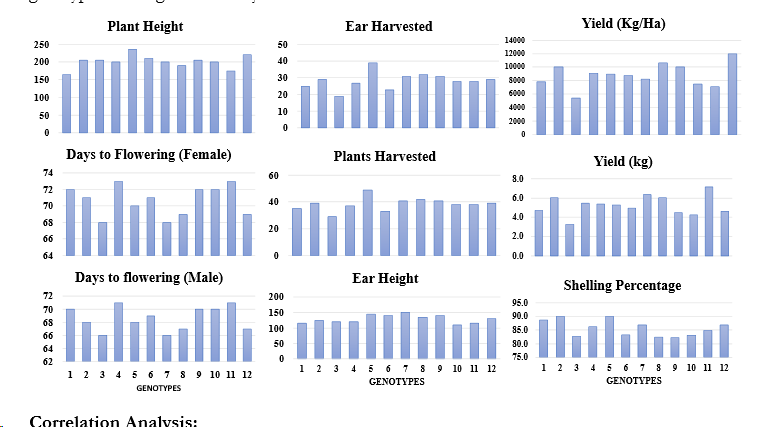
The objective of this study was to assess the performance of 12 maize genotypes, including one check genotype (genotype 1), for phenology, morphology, and yield traits in the field. A randomized complete block design with three replications was used. Observations were made for DFM, DFF, PH, EH, TPH, TEH, SP, yield (kg) and yield (kg/ha). Analysis of variance revealed significant differences for most traits, suggesting that there is a considerable amount of genetic variability. The differences among genotypes were statistically significant at (P ≤ 0.05). Mean comparisons were performed using the LSD test at 5% probability level. Standard errors (±SE) were calculated for all measured traits, and confidence intervals (95%) confirmed the reliability of the observed differences among genotypes. Average performance revealed that several genotypes outperformed the check for important traits. Genotypes 3 and 7 were early flowering (DFM = 66 days; DFF = 68 days), while genotypes 4 and 11 were late flowering. PH ranged from 165 cm (check) to 235 cm (genotype 5), and EH from 110 to 150 cm. TPH and TEH were higher in genotype 5, while the lowest was in genotype 3. SP varied from 82.4% to 90.0% (genotypes 2 and 5, respectively). Genotypes differed in yield, with the highest yield (7.2 kg; 11946 kg/ha) in genotype 12, followed by genotypes 8 and 2, whereas the lowest yield was in genotype 3. Correlation studies showed that yield was positively correlated with PH, EH, and related traits, suggesting they could play a significant role in yield enhancement. In general, genotype 12 was the best performer, followed by genotypes 8 and 2. This research suggests that selection for plant architecture and yield components can lead to improved maize yield.