Selenium-Facilitated Antioxidant System Response in Zea Mays Seedlings Under Reactive Oxygen Species-Induced Stress
Keywords:
Antioxidative Defense, Bacillus, Hydrogen Peroxide, Seedling Growth, Selenium, Oxidative Stress, Plant-Microbe Interactions, Zea MaysAbstract
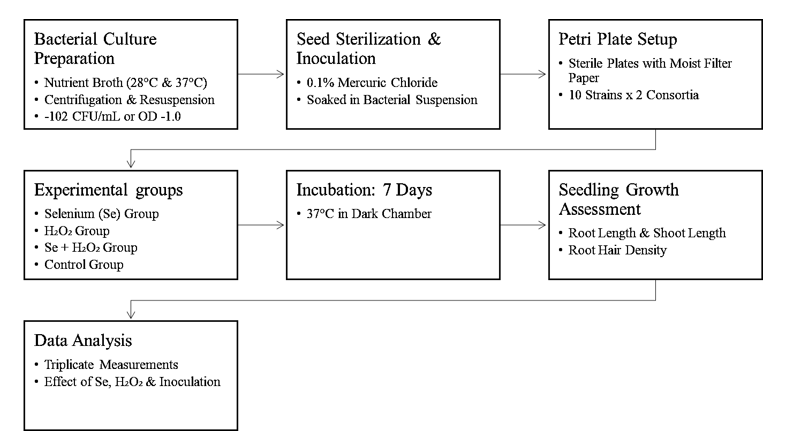
Selenium (Se) is a vital micronutrient that plays an important role in metabolic, cellular, and physiological activities. Its deficiency can hinder growth, immunity, fertility, and cellular structure. This study inspected the effect of selenium and hydrogen peroxide-induced oxidative stress on the Zea mays L. seed germination, growth, and antioxidative activity. Soil samples were collected produced significant selenite-resistant and auxin-producing strains. These isolates were further tested for selenite reduction, plant growth-promoting characteristics, and other biochemical properties. Optimal selenite reduction was achieved at pH 7 at a temperature of 37°C, and up to 1900 μg ml⁻¹ concentration. Responses to high selenite concentrations fluctuated from strain to strain, including variations in growth, auxin production, and antimicrobial activity against Bacillus thuringiensis. After six days of exposure to 20 mM H₂O₂, a considerable rise in root malondialdehyde content was seen, suggesting the presence of oxidative stress. Generally, selenium improved antioxidative defense mechanisms and tolerance to H₂O₂ stress. These findings deduce that PGPR inoculation significantly reduced H₂O₂ and MDA levels while enhancing POD activity and seedling growth under oxidative stress.