Integrated Water Management for Sustainable Irrigation Efficiency and Crop Water Productivity in Agricultural Systems
Keywords:
Irrigation efficiency, productivity, water management, sustainable agricultureAbstract
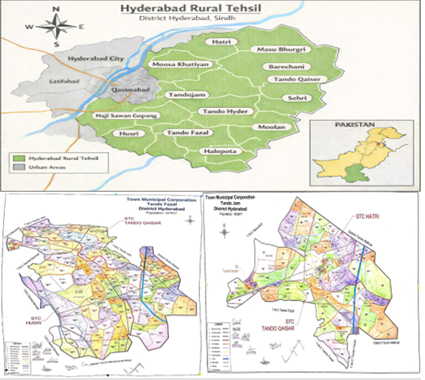
This study was conducted in Hyderabad (Rural) Tehsil, Sindh, Pakistan, where agriculture is the primary livelihood and farming is predominantly practiced under traditional conditions. The research assessed the socio-economic characteristics of farmers, examined water management practices and evaluated their effects on crop yield, irrigation efficiency, and crop water productivity across 120 farms. The results showed that the respondents had an average farm size of 6.5 ha, with a mean cultivated area of 5.8 ha and an average farming experience of 18.5 years. Approximately 62% of the farmers were literate, while only 38% had access to agricultural extension services, indicating variations in socio-economic conditions and farm characteristics. Regarding irrigation water sources, 60% of farmers relied on canal water, 30% used tube wells, and 10% practiced conjunctive use of canal and groundwater. The irrigation methods adopted included basin irrigation (30%), furrow irrigation (55%), and flood irrigation (15%). Furthermore, 65% of respondents used traditional land-leveling techniques, while 60% followed fixed rotational irrigation schedules. The volume of water applied varied among irrigation methods, with basin irrigation having the highest water application (9,000 m³ ha⁻¹) and furrow irrigation the lowest (6,200 m³ ha⁻¹). Furrow irrigation produced the highest crop yields, recording 3,980 kg ha⁻¹ for wheat, 2,750 kg ha⁻¹ for cotton, and 72,000 kg ha⁻¹ for sugarcane, outperforming basin and flood irrigation methods. Water-use efficiency and crop water productivity were inversely related to the volume of water applied. Furrow irrigation achieved the highest irrigation efficiencies for wheat (83.87%), cotton (88.23%), and sugarcane (92.59%), as well as the highest crop water productivity values of 0.64, 0.40, and 5.33 kg m⁻³ for wheat, cotton, and sugarcane, respectively. Comparative analysis revealed that improved irrigation management practices reduced water use by up to 28%, increased crop yields by 24%, and enhanced crop water productivity by 67% compared with conventional flood irrigation. Analysis of variance (ANOVA) indicated significant differences among irrigation methods in terms of crop yield and water productivity. Regression analysis identified furrow irrigation, crop-based irrigation scheduling, laser land levelling, and the amount of water applied as significant determinants of crop water productivity. The model explained 61% of the variation in crop water productivity (R² = 0.61). The major constraints affecting water productivity included inadequate canal water supplies (65%), high pumping costs (53%), poor land levelling (41%), and limited technical knowledge (31%). The study recommends the adoption of crop-based irrigation scheduling in place of fixed rotational schedules to improve water-use efficiency and crop performance. In addition, farmers should be provided with technical training on modern irrigation methods and effective water management practices. Greater emphasis should also be placed on accurately assessing crop water requirements to promote sustainable agricultural productivity and efficient water resource utilization.
Additional Files
Published
Issue
Section
License
Copyright (c) 2026 xdgen

This work is licensed under a Creative Commons Attribution 4.0 International License.