Isolation, Screening and Molecular Characterization of Cellulase producing Trichoderma Strains
Keywords:
Cellulase, Fungal Strains, Internal Transcribed Spacer Region, Ammonium SulfateAbstract
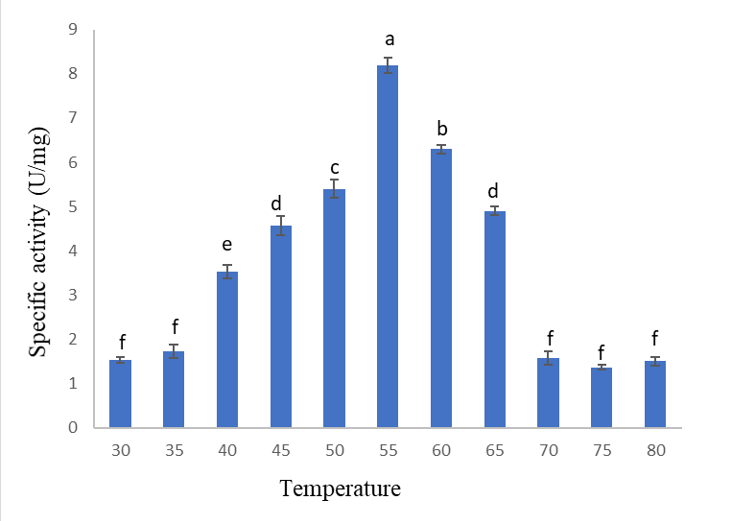
Cellulose is the most abundant polysaccharide on earth, and its crystalline structure is challenging to break down into sub-particles. To overcome the issue, cellulase enzyme plays a key role in the breakdown of cellulose into glucose monomers. Microorganisms, such as fungi, are known for the production of various commercially important enzymes. Among fungal genera, Aspergillus and Trichoderma are considered to have great potential for cellulase production. The present study was conducted to collect 75 soil samples from different districts in Punjab to isolate the Trichoderma strains. The isolated Trichoderma strains were then screened through double-phase screening methods. The highest cellulase-producing strain was characterized based on the internal transcribed spacer (ITS) region using the primer sets ITS1F and ITS4 and was identified as Trichoderma asperellumm. Congo red dye and cellulase assay showed the maximum activity of 0.83 U/ml from Trichoderma asperellum and was used for cellulase production. Endoglucanase was produced using basal media with CMC as a substrate at 28ºC for 72h. Crude extract was subjected to the Lowry assay and the total protein content was recorded. Cellulase was partially purified using various ammonium sulfate concentrations (30-80%). Partially purified enzyme characterized based on temperature and pH. The enzyme showed a maximum specific activity of 104.39 U/mg after dialysis. The maximum activity of the partially purified enzyme was observed at pH 4 and temperature 55ºC