Evaluation of Commercially Available Biostimulants on Growth, Seed Yield, and Oil Quality of Sunflower Under Rainfed Conditions
Keywords:
Sunflower, Biostimulants, Foliar application, Growth attributes, Sustainable crop production.Abstract
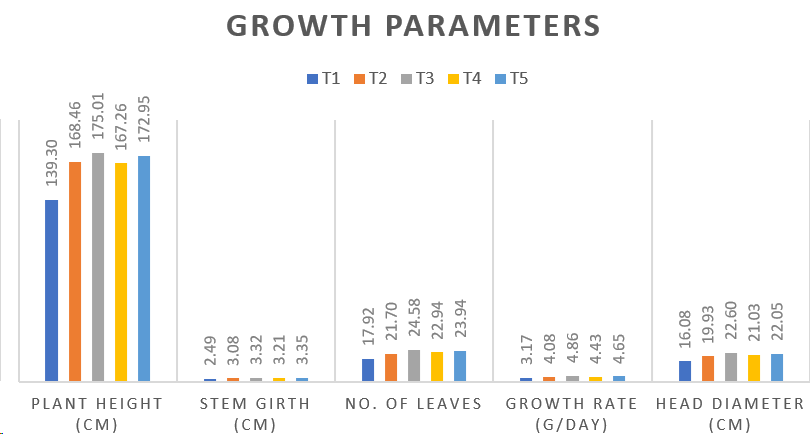
A field experiment was conducted during the spring season of 2025 at the University Research Farm, Koont (Punjab, Pakistan), to evaluate the effectiveness of commercially available biostimulants on the growth, yield, and oil quality of sunflower grown under rainfed conditions. The experiment was conducted using a Randomized Complete Block Design (RCBD) with five treatments and three replications each: T1: Control (basal fertilization only), T2: Wokozim Power Plus (granular application 25 kg ha-1), T3: Maxicrop Liquid Seaweed (foliar spray 5 L ha⁻¹), T4: Small Liquid Packs (foliar spray 2.5 L ha⁻¹), and T5: Liquid Seaweed Extract (foliar spray 4 L ha⁻¹). Growth parameters measured included chlorophyll content, plant height, stem girth, number of leaves, growth rate, and head diameter, while yield attributes comprised number of achenes per head, 1000-achene weight, achene yield, biological yield, and harvest index. Quality parameters such as oil content, fatty acid composition, and seed protein were also analyzed. Results showed significant treatment effects on all parameters. The LSD values of the studied parameters are: Chlorophyll content (3.10), Oil Content (2.6), Palmitic Acid (0.4), Stearic Acid (0.30), Oleic Acid (2.2), Linoleic Acid (2.5), Seed protein Content (1.9), Number of achenes (95), 1000-Achenes Weight (4.10), Achenes Yield (210), Biological Yield (420), Harvest Index (3.8), Plant Height (8.5), Stem Girth (0.22), Number of leaves (2.10), Growth Rate (0.48), Head Diameter (2.4). The tallest plants were recorded in T5 (172 cm), whereas maximum stem girth (3.35 cm) and growth rate (4.63 g day⁻¹) were also associated with foliar biostimulant treatments. T4 produced the highest number of leaves (22.94) and head diameter (22.00 cm), indicating improved vegetative vigor. Yield performance was prominently enhanced by biostimulant application, with T4 generating the greatest number of achenes (1177), the highest 1000-achene weight (68.48 g), achene yield (3727 kg ha⁻¹), biological yield (8311 kg ha⁻¹), and harvest index (48%). In contrast, the control consistently exhibited the lowest values across growth and yield traits. Quality analysis further demonstrated the performance of foliar treatments. T4 and T5 recorded higher chlorophyll content (~47 SPAD) and oil content (~42%), while oleic acid and seed protein increased to 30.7% and 20.82%, respectively. Saturated fatty acids remained stable or slightly reduced, suggesting improved nutritional quality of the oil. Overall, foliar application of seaweed-based biostimulants enhanced physiological activity, assimilate partitioning, and seed composition, ultimately leading to superior crop productivity under moisture-limited conditions.