Cross-Sectional Assessment of Poultry Infectious Diseases Across Different Production Systems and Breeds in Karachi
Keywords:
Poultry Diseases, Disease Prevalence, Breed Susceptibility, Risk Factors, BiosecurityAbstract
Background:
In Karachi, Pakistan, poultry production is a pivotal source of income and nutrition, but the productivity is significantly limited by infectious diseases. Despite the significance of breed-specific disease dynamics to effective control, there is limited local epidemiological data on various production systems.
Objectives:
The purpose of this study was to identify the prevalence of the major infectious poultry diseases, evaluate the susceptibility by breed and age, and define the main management and biosecurity risk factors of the commercial and indigenous chicken population in Karachi.
Methods:
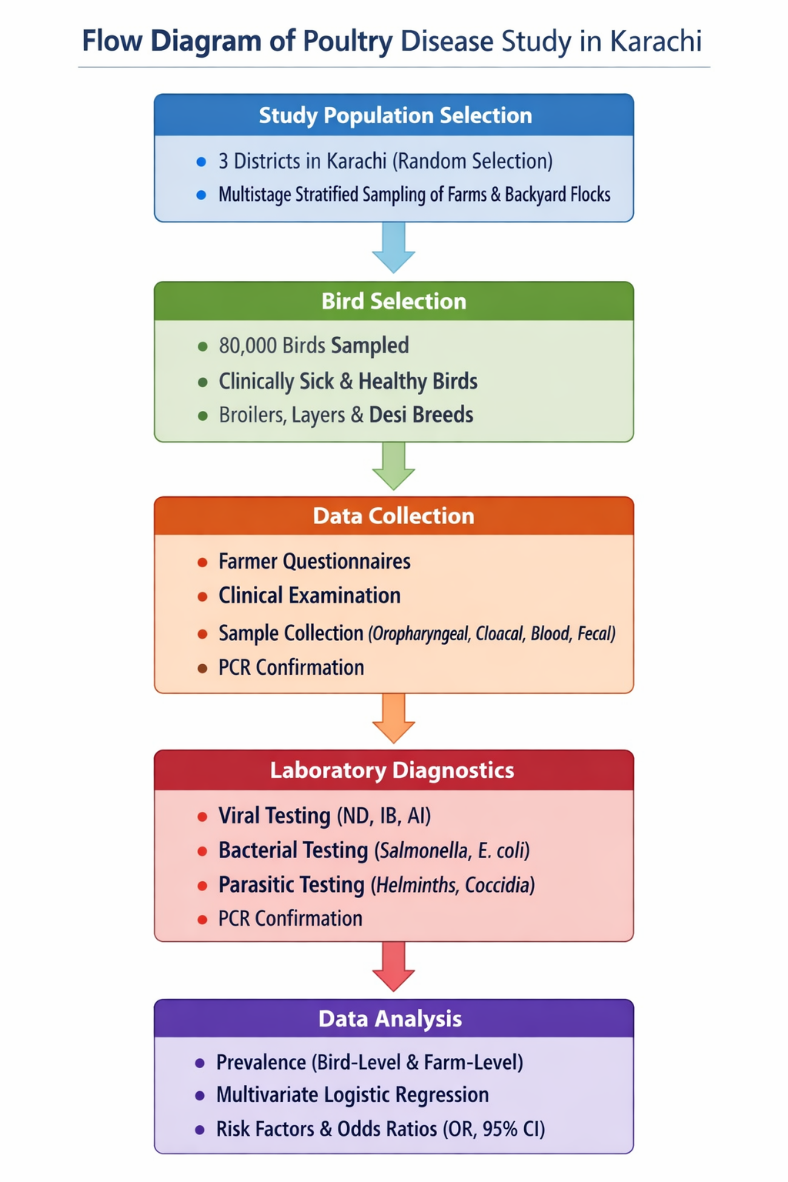
A multistage stratified sampling design was used to select three randomly chosen districts, where a cross-sectional survey was done. Backyard flocks, commercial broiler and layer farms, were all covered. Data was gathered due to the clinical examination, structured farmer questionnaires, and biological sampling (oropharyngeal, cloacal, blood, and fecal samples). The rapid antigen tests, ELISA, and PCR were used to detect major viral pathogens, bacterial pathogens, and parasitic pathogens. The descriptive statistics and multivariate logistic regression were used to analyze disease prevalence and risk factors.
Key Findings:
Infectious diseases were widespread in all production systems, among 80,000 birds that were investigated. In layers, bacterial infections had dominated, whilst viral infections had been more prevalent in broilers. The most common bacterial diseases were salmonellosis and colibacillosis, and the most common viral infections that were identified included Newcastle disease, infectious bronchitis, and infectious bursal disease. Protozoal infections were also low but significant (mostly coccidiosis). The incidences of disease were different according to breed and age, with salmonellosis among the older birds and Newcastle disease in the younger flocks. Risk factors included poor hygiene, insufficient vaccination, and poor biosecurity. Poor biosecurity (AOR = 3.42; 95% CI: 2.61-4.48), absence of vaccination (AOR = 2.87; 95% CI: 2.03-4.06), and deep-litter housing (AOR = 1.94; 95% CI: 1.31-2.88) were found to be significant predictors of occurrence of infectious diseases using multivariate logistic regression.
Implications:
The poultry sector of Karachi is significantly affected by infectious diseases, and this need is indicative of major lapses in the management of farms and the prevention of diseases. The results of this study can be used to justify the application of focused vaccination initiatives, better biosecurity, and breed-specific disease management methods to minimize the loss of production and improve the health of poultry in the area.