Studies on Digestive Anatomy and Digestibility Influenced by Cassia Fistula Powder in Gallus Domestics
Keywords:
Cassia Fistula, Digestive Anatomy, Digestibility, Gallus DomesticusAbstract
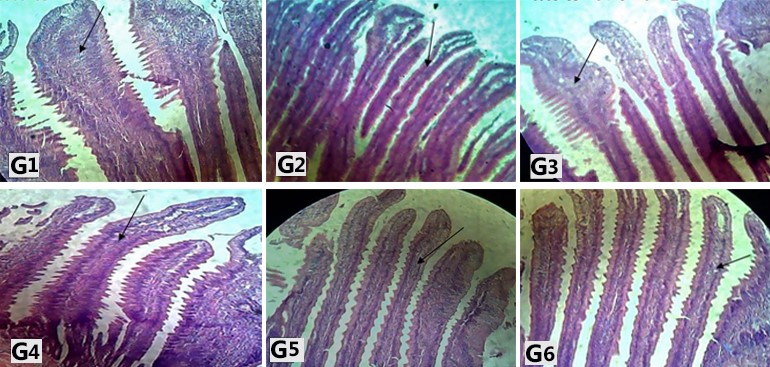
The present study was conducted to evaluate the effects of Cassia fistula (CF) powder as a phytogenic feed additive on nutrient digestibility, intestinal morphology, and liver histology in broiler chickens, with particular emphasis on the starter phase. A total of 80 one-day-old broiler chicks were randomly allocated to six experimental groups under a completely randomized design. Group G1 (commercial diet) and G2 (basal diet) served as control groups. Groups G3 and G4 received basal diets supplemented with CF powder at 250 mg/kg during the starter and finisher phases, respectively, while groups G5 and G6 received commercial diets supplemented with CF powder at the same dose during the starter and finisher phases, respectively. Parameters evaluated included nutrient digestibility (crude protein, fat, and metabolizable energy), relative organ weights, intestinal histomorphology, and liver histology.
Dietary supplementation of CF powder, particularly in group G5, resulted in a significant (p < 0.05) improvement in crude protein, fat, and metabolizable energy utilization compared to control and other treated groups. Relative weights of digestive organs (proventriculus, liver, and gizzard) did not differ significantly (p > 0.05) among groups, indicating the absence of adverse effects. Intestinal histomorphology revealed a significant (p < 0.05) increase in villus height in CF-supplemented groups, suggesting enhanced absorptive capacity. Liver histological examination showed normal hepatic architecture across all treatment groups, with no evidence of pathological alterations, supporting the safety of CF supplementation at the tested dose.
In conclusion, dietary inclusion of Cassia fistula powder at 250 mg/kg, particularly when supplemented during the starter phase with a commercial diet, improved nutrient utilization and intestinal morphology without inducing hepatic toxicity. These findings suggest that Cassia fistula has potential as a natural, safe phytogenic feed additive to improve digestive efficiency in broiler production, although further studies incorporating biochemical and dose-response evaluations are warranted.